
Canada AI Cameras Fines – Canada is entering a new era of road safety as automated enforcement replaces traditional roadside traffic checks. With AI-powered cameras now being deployed across major cities and highways, drivers are facing stricter, faster, and more consistent monitoring than ever before. These systems are designed to identify violations such as speeding, red-light running, and distracted driving without direct police interaction. For Canadian motorists, this shift means fewer manual stops but higher accountability, as fines of up to $1,000 can now be issued automatically. Understanding how this technology works is essential for staying compliant.
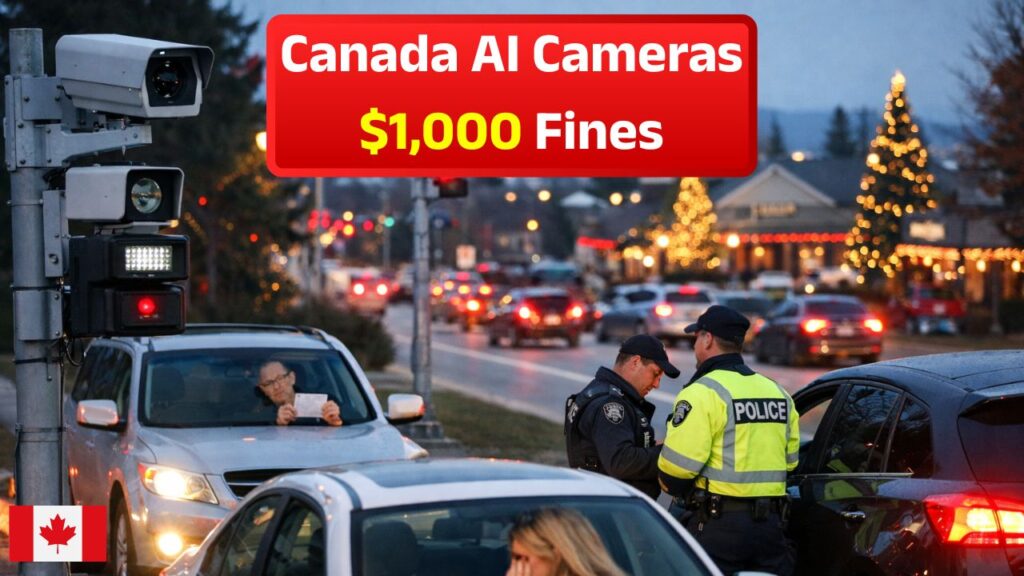
AI traffic cameras and automatic fines across Canada
The rollout of AI traffic cameras across Canada marks a significant change in how traffic laws are enforced. Using advanced sensors and machine learning, these cameras can accurately detect speeding vehicles, unsafe lane changes, and drivers using mobile phones. Once a violation is identified, the system automatically captures evidence and issues a fine, which can reach $1,000 depending on the offence and province. Canadian authorities say this reduces human error and improves road safety by ensuring consistent enforcement. For drivers across Canada, the key adjustment is recognizing that violations are now recorded instantly, even without a police officer present.

Automated traffic enforcement for Canadian drivers
For Canadian drivers, automated traffic enforcement brings both convenience and responsibility. On one hand, fewer roadside stops mean less congestion and reduced confrontation during daily commutes. On the other hand, AI systems operate continuously, leaving little room for leniency. Provincial transport departments note that these cameras are strategically placed in high-risk zones such as school areas, busy intersections, and accident-prone highways. Drivers must adapt their habits, as warnings are no longer issued on the spot. Instead, fines and notices arrive by mail, making awareness of road rules more important for motorists nationwide.
 Triple Pension Approved for Seniors This Christmas: Direct Deposits Rolling Out on 26 December 2025
| Feature | Details |
|---|---|
| Technology Used | AI-powered speed and behaviour detection |
| Maximum Fine | Up to $1,000 per violation |
| Key Violation Types | Speeding, red-light running, phone use |
| Enforcement Areas | Urban roads, school zones, highways |
Goodbye to manual checks under provincial road rules
Under updated provincial road rules, manual traffic checks are gradually being phased out in favour of technology-led enforcement. Provinces like Ontario and British Columbia are expanding AI camera networks to support police resources and improve response times. Officials state that this system allows officers to focus on serious incidents while routine violations are handled automatically. For residents in these provinces, it also means clearer evidence and fewer disputes, as each fine is supported by digital records. Adapting to this change requires drivers to stay informed about local regulations and enforcement zones.
AI road safety monitoring for Canadians nationwide
AI road safety monitoring is being promoted as a long-term solution to reduce accidents across the country. Transport authorities believe consistent enforcement encourages safer driving habits among Canadians, particularly in high-risk areas. Public awareness campaigns are accompanying the rollout to ensure drivers understand how the cameras work and what penalties apply. While concerns about privacy remain, governments emphasize that data is used strictly for traffic enforcement. For Canadians nationwide, the message is clear: safer roads depend on compliance, and AI cameras are now a permanent part of daily driving.
Frequently Asked Questions (FAQs)
 Work Permit Renewal Rules Updated for 2025: What Temporary Workers in Canada Need to Prepare
1. What violations can AI traffic cameras detect in Canada?
They can detect speeding, red-light violations, and distracted driving such as mobile phone use.
2. How much is the automatic fine issued by AI cameras?
Fines can go up to $1,000 depending on the violation and provincial laws.
3. Will drivers still be stopped by police for traffic checks?
Yes, but routine checks are reduced as many violations are now enforced automatically.
4. Are AI traffic cameras active across all of Canada?
They are being rolled out province by province, with major cities already covered.
 CRA Approves $1,350 One-Time Benefit: Eligible Canadians to Receive Payment on 26 December 2025
