
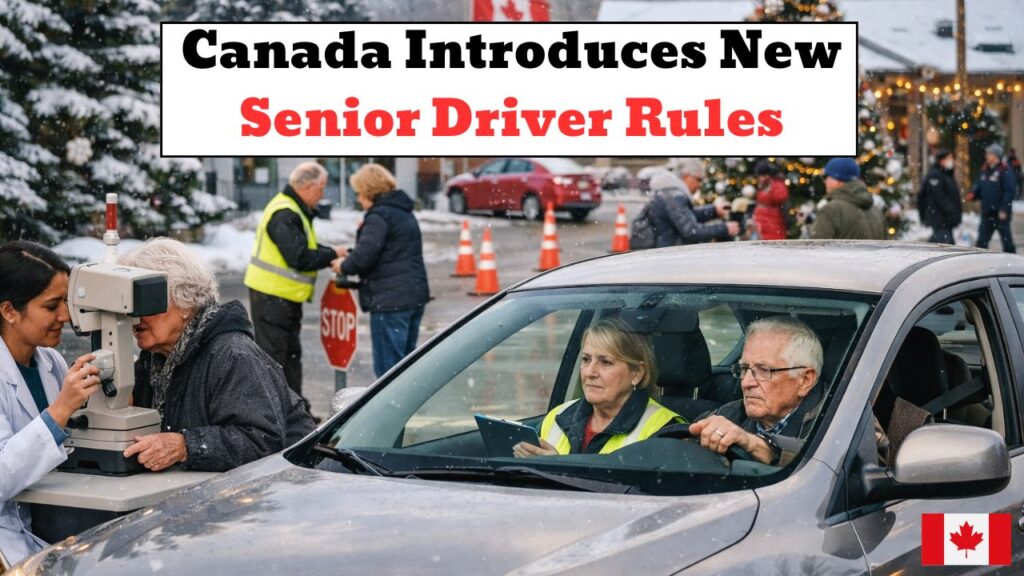
Canada New Senior Driver Rules 2025 – Canada is preparing to roll out major road safety reforms in 2025 that directly affect older drivers across the country. The new senior driver rules focus on mandatory vision screening and road testing for ageing motorists, aiming to balance public safety with personal independence. As Canada’s population continues to age, transport authorities are tightening assessment standards to ensure that drivers remain medically and cognitively fit to operate vehicles. These changes are especially important for seniors who rely on driving for daily activities, healthcare access, and social connection, making awareness and preparation essential nationwide.
Senior Driver Vision Test Rules for Older Drivers in Canada
The updated senior driver vision test rules in Canada will require older motorists to undergo more frequent eyesight checks when renewing or retaining their driving licences. Canadian regulators have highlighted declining visual acuity as a key risk factor in age-related road incidents. Under the new framework, seniors may be asked to complete in-clinic or certified vision assessments to confirm adequate depth perception, peripheral vision, and night-driving capability. These measures are designed to identify correctable issues early, such as cataracts or uncorrected prescriptions, rather than automatically removing driving privileges. Across Canada, authorities stress that the goal is prevention and safety, not punishment, allowing capable senior drivers to continue driving confidently.
 CPP and OAS December 2025 Payment Dates Revised: CRA Issues Updated Deposit Schedule for 26 December
Mandatory Road Testing for Senior Motorists Across Canadian Provinces
In addition to vision screening, mandatory road tests for senior motorists across Canadian provinces will become more common from 2025. Provincial transport departments may require practical driving assessments once drivers reach a specified age threshold or show medical risk indicators. These road tests focus on real-world skills such as reaction time, lane discipline, intersection judgment, and hazard awareness. Canadian officials note that age alone will not automatically disqualify drivers; instead, assessments will be evidence-based. For many older Canadians, passing a road test may simply confirm continued competence, while those who struggle may be offered retraining or restricted licences rather than full suspension.

| Requirement | Who It Applies To | Frequency | Purpose |
|---|---|---|---|
| Vision Test | Senior drivers | At licence renewal | Check eyesight and visual safety |
| Road Test | Older motorists | Age or risk-based | Assess real driving skills |
| Medical Review | At-risk seniors | As required | Confirm fitness to drive |
| Restricted Licence | Approved cases | Ongoing | Allow limited, safer driving |
Canada 2025 Driving Licence Changes Affecting Elderly Drivers
The Canada 2025 driving licence changes affecting elderly drivers reflect a broader national shift toward proactive road safety management. Transport authorities are aligning policies with medical research showing how ageing can impact reflexes and perception. For elderly drivers, this may mean earlier notifications, additional documentation, or conditional approvals tied to health outcomes. However, Canadian officials emphasise fairness, noting that many seniors maintain excellent driving records well into later life. By introducing structured testing instead of blanket age bans, Canada aims to respect independence while reducing accident risks linked to untreated vision loss or declining reaction times.
Road Safety Measures for Senior Citizens in Canadian Communities
Beyond testing, road safety measures for senior citizens in Canadian communities will include education, refresher courses, and clearer guidance on adapting driving habits. Local transport agencies and senior organisations may collaborate to offer voluntary training focused on defensive driving and updated traffic rules. In many Canadian regions, seniors will also receive information on alternative transport options should driving become challenging. These community-level efforts reinforce that the new rules are part of a supportive system, helping older adults remain mobile, informed, and safe while sharing the road responsibly with other Canadians.
Frequently Asked Questions (FAQs)
 Triple Pension Approved for Seniors This Christmas: Direct Deposits Rolling Out on 26 December 2025
1. At what age do the new senior driver rules apply in Canada?
The exact age varies by province, but enhanced testing generally applies to older drivers identified by age or medical risk.
2. Will all seniors be required to take a road test?
No, road tests are typically required based on age thresholds, medical reviews, or specific risk indicators.
3. Can a senior lose their licence immediately after failing a test?
In many cases, retraining or restricted licences are offered before full suspension is considered.
4. Do these rules apply equally across all Canadian provinces?
The framework is national, but specific testing schedules and requirements are set by each province.
 Work Permit Renewal Rules Updated for 2025: What Temporary Workers in Canada Need to Prepare
