
Canada Retirement Age Update – Canada is entering a new phase in retirement planning as policymakers signal a gradual move away from retiring at 62. With longer life expectancy, rising healthcare costs, and labour shortages across key sectors, the conversation around working longer has gained momentum nationwide. For many Canadians, especially middle-aged workers and future retirees, this shift raises questions about pensions, financial security, and quality of life after work. The government’s position reflects broader economic realities, encouraging individuals to remain active in the workforce while adjusting long-term retirement expectations across Canada.
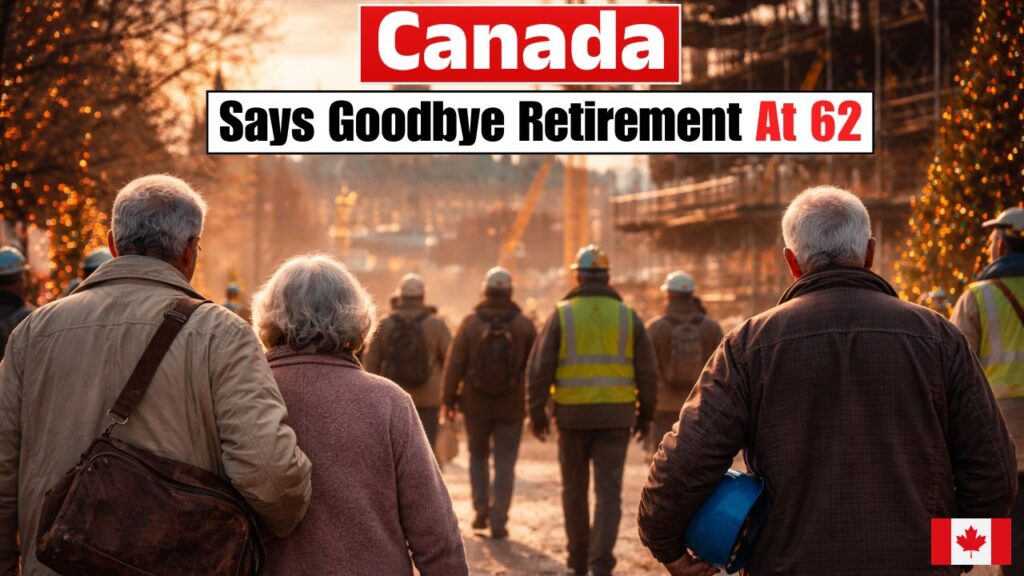
Canada Retirement Age Changes and Longer Working Years for Canadian Citizens
Discussions around retirement age changes in Canada focus on sustainability rather than sudden reform. Canadian citizens are being encouraged to plan for longer working lives as public pension systems face mounting pressure. While no immediate law forces everyone to work beyond 62, policy signals suggest incentives to delay retirement and remain employed. Programs like the Canada Pension Plan already reward those who defer benefits, making extended employment financially appealing. Across Canada, employers are also adapting by offering flexible work arrangements, part-time roles, and phased retirement options, allowing older workers to stay productive without full-time strain. This evolving approach aims to balance personal choice with national economic stability.

Government Signals on Extended Careers Across Canada’s Workforce
Across Canada’s workforce, government messaging increasingly highlights the value of experience and skills held by older employees. Extended careers are framed as a benefit not only to the economy but also to individuals who may enjoy higher lifetime earnings and stronger pension payouts. Canadian policymakers point to global trends where people live healthier lives for longer, making work beyond traditional retirement ages more feasible. Industries such as healthcare, education, and skilled trades are expected to rely heavily on senior workers. These signals encourage Canadians to reassess long-term career planning, upskilling later in life, and maintaining employability well past age 62.
 Triple Pension Approved for Seniors This Christmas: Direct Deposits Rolling Out on 26 December 2025
| Aspect | Current Situation | Future Direction |
|---|---|---|
| Early Retirement Age | 62 years common benchmark | Gradual shift toward later retirement |
| CPP Benefits | Reduced if taken early | Higher payouts for delayed claims |
| Life Expectancy | Increasing steadily | Longer working life encouraged |
| Labour Market | Skill shortages emerging | Older workers play key role |
Working Beyond 62 and Retirement Planning for Canadians
For Canadians, working beyond 62 is becoming a practical consideration rather than an exception. Financial advisors increasingly recommend reassessing retirement timelines to account for inflation, housing costs, and healthcare needs. Continuing employment, even part-time, can significantly reduce reliance on savings while boosting pension outcomes. Many Canadians also value the social and mental health benefits of staying engaged through work. Government signals support this mindset by promoting age-friendly workplaces and lifelong learning initiatives. Rather than a forced delay, the shift encourages flexible, personalized retirement planning aligned with modern Canadian realities.
Impact of Longer Careers on Canadian Seniors and Pension Security
Canadian seniors stand to experience mixed but potentially positive impacts from longer careers. On one hand, delayed retirement can strengthen pension security and reduce financial stress in later years. On the other, it requires careful health and workload considerations. The Canadian approach emphasizes choice, with systems designed to reward continued work rather than penalize early exit. Employers and governments are increasingly aware of the need for supportive policies, such as workplace accommodations and retraining programs. For many older Canadians, extended careers may offer a more stable and fulfilling transition into retirement.
Frequently Asked Questions (FAQs)
 Work Permit Renewal Rules Updated for 2025: What Temporary Workers in Canada Need to Prepare
1. Is Canada officially ending retirement at 62?
No, but the government is signaling incentives to work longer rather than retire early.
2. Will Canadians lose pension benefits if they retire early?
Early retirement usually results in reduced CPP payments compared to delaying benefits.
3. Can Canadians still choose to retire at 62?
Yes, retirement remains a personal choice, though financial outcomes may differ.
4. Why is Canada encouraging longer working years?
Longer lives, labour shortages, and pension sustainability are key reasons.
 CRA Approves $1,350 One-Time Benefit: Eligible Canadians to Receive Payment on 26 December 2025
