Eating While Driving Rules in Canada – Canada is tightening its approach to road safety as distracted driving continues to cause serious accidents nationwide. A new wave of traffic enforcement rules is now targeting drivers who eat or handle food while operating a vehicle, a habit authorities say diverts attention just as dangerously as mobile phone use. Under updated provincial and municipal regulations, motorists caught eating while driving could face steep penalties, with fines reaching as high as $10,000 in severe or repeat cases. These changes aim to reshape everyday driving behaviour across Canada and reinforce a culture of full attention behind the wheel.
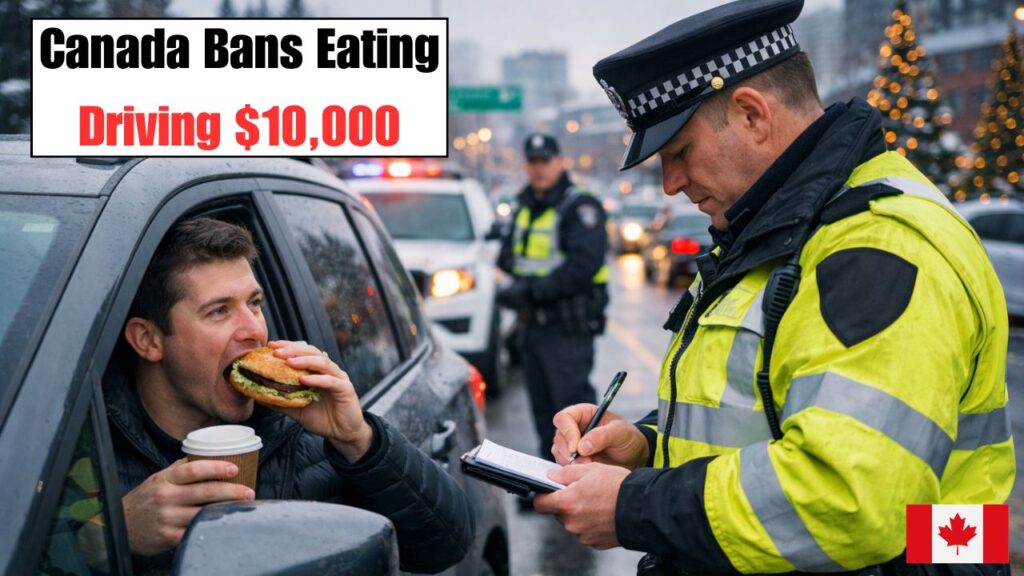
Eating While Driving Fines Across Canada Under New Traffic Safety Rules
Eating while driving fines in Canada are no longer a minor slap on the wrist. Law enforcement agencies are increasingly treating the behaviour as a form of distracted driving, especially when it involves using hands, unwrapping food, or taking eyes off the road. Across Canada, police officers now have broader discretion to issue tickets if food consumption interferes with safe vehicle control. While penalties vary by province, repeat offences or incidents that lead to collisions can escalate rapidly. Canadian drivers are being warned that something as casual as eating a burger or holding a coffee cup could result in points on their licence, higher insurance premiums, and substantial fines under updated road safety laws.
 CRA Approves $1,350 One-Time Benefit: Eligible Canadians to Receive Payment on 26 December 2025
New Distracted Driving Laws Affecting Canadian Drivers Nationwide
For Canadian drivers, the new distracted driving laws represent a shift toward stricter interpretation rather than entirely new legislation. Provincial transport authorities have clarified that any activity reducing driver focus—including eating—can qualify as an offence. Across the country, enforcement campaigns are increasing, particularly in urban areas and during peak traffic hours. Authorities argue that eating often leads to one-handed driving, delayed reactions, and sudden lane drift. As a result, motorists in Canada are being urged to finish meals before driving or pull over safely. These changes reflect a broader national push to reduce collision rates and align enforcement with modern road safety research.

| Violation Type | Possible Fine Range | Licence Penalties |
|---|---|---|
| Minor distracted driving (eating) | $300 – $1,000 | Demerit points |
| Repeat offence | $1,000 – $3,000 | Points + suspension risk |
| Eating causing unsafe driving | $3,000 – $5,000 | Higher insurance impact |
| Collision linked to distraction | Up to $10,000 | Suspension or court action |
Canada’s Road Safety Crackdown Targets Everyday Driving Habits
Canada’s road safety crackdown is designed to change everyday habits that drivers often overlook. Transport officials stress that distracted driving is not limited to phones or screens; routine actions like eating, drinking, or reaching for items can be just as dangerous. Across Canadian provinces, public awareness campaigns are now highlighting real crash data linked to in-car distractions. Drivers are being encouraged to treat their vehicles as food-free zones while in motion. By tightening enforcement and increasing fines, authorities hope Canadian roads will become safer, particularly for pedestrians, cyclists, and other vulnerable road users sharing busy streets.
How Canadian Road Enforcement Will Monitor Distracted Driving Behaviour
Canadian road enforcement agencies are adopting more proactive monitoring techniques to identify distracted driving behaviour. Police patrols are being trained to spot visual cues such as drivers looking down, steering with one hand, or handling food containers. In some regions of Canada, unmarked vehicles and roadside observation points are being used to improve detection rates. Officers may also rely on dashcam footage and witness reports following accidents. This increased vigilance means drivers can no longer assume eating behind the wheel will go unnoticed, reinforcing the message that full attention is now an expectation, not a suggestion.
Frequently Asked Questions (FAQs)
 Canada 2025 Work Permit Extension Rules Updated: What Temporary Workers Must Know Before Renewal
1. Is eating while driving illegal everywhere in Canada?
It is treated as distracted driving in many provinces if it affects safe vehicle control.
2. Can I really be fined $10,000 for eating while driving?
Yes, in severe cases involving accidents or repeat offences, fines can reach that level.
3. Will eating while driving add demerit points to my licence?
Yes, many provinces apply demerit points under distracted driving rules.
4. What is the safest option if I need to eat during a long drive?
Pull over safely and eat while parked to avoid penalties and reduce accident risk.
 CRA $2,000 Relief Payment Update: Direct Deposit Expected on 26 December 2025, Officials Confirm